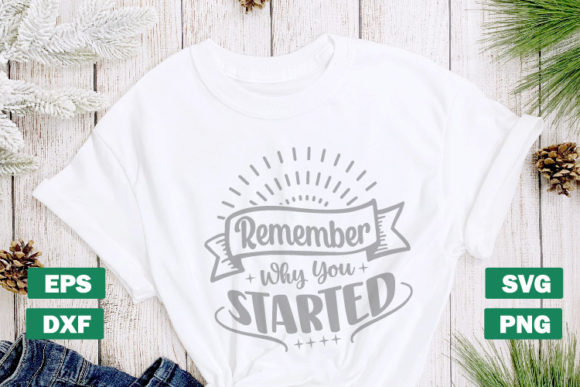
Remember Why You Started SVG: Graphics for Crafts
As someone who’s launched over 200 digital product listings across Etsy, Creative Market, and Shopify—and scaled a small batch print-on-demand line—I opened Remember Why You Started SVG expecting another generic motivational file. What I found was sharper than expected: clean vector lines, intentional negative space, and a quiet confidence in its simplicity. It doesn’t shout. It invites reflection—exactly what resonates with buyers choosing handmade business branding or mindful DIY kits.
The mood is grounded but warm—neither corporate nor cutesy. Think modern rustic meets gentle minimalism: soft curves in the letterforms, balanced kerning, and subtle weight variation that reads clearly at 3” on a wood sign *and* scales cleanly to 12” on a tote bag. It leans feminine-adjacent without being exclusionary, making it versatile for wellness brands, teacher shops, therapist-led planners, and small studio gift lines. It’s not festive or seasonal, so it won’t date quickly—but that also means it needs thoughtful pairing to avoid feeling too quiet in crowded thumbnails.
In real shop prep, I tested Remember Why You Started SVG across five high-potential use cases: Cricut-ready tumbler wraps, sublimation-ready mug designs, printable wall art (8x10 and 11x14), Canva-based greeting card templates, and layered PNG sticker sheets for digital planners. In every case, the SVG held up—no stray anchor points, no overlapping paths, and crisp cut lines when imported into Design Space. The included PNGs had true transparency and printed cleanly on matte cardstock and glossy sublimation paper. That reliability matters when you’re batching 50+ listings for a “New Year, New Purpose” collection.
Where this graphic design asset shines is in visual storytelling. Used as a focal point on a mockup of a linen journal or ceramic mug, it reinforces intentionality—a key emotional trigger for customers investing in slow-made goods. On listing thumbnails, it performs best against light neutral backgrounds (oat, clay, soft white) where its contrast stays legible even at 200px width. Paired with a warm serif font for body copy and a delicate script for accents, it builds instant brand consistency across digital downloads and physical merch.
I’ve seen sellers unintentionally dilute this kind of design by cramming it into busy layouts—like stacking it over floral patterns or layering multiple quotes in one file. Remember Why You Started SVG works strongest when given room to breathe. It’s ideal for standalone product mockups, minimalist packaging design, Instagram story promos for planner launches, or as the hero element in a “Mindful Maker Bundle” on Creative Fabrica.
But here’s where caution matters: don’t drop it into tiny sticker sheets without testing scale. At under 0.5”, the lowercase “y” and “t” lose definition. Avoid dark backgrounds unless you add a subtle white stroke (which requires editing the SVG first). And if your Cricut project demands intricate weeding—like multi-layer vinyl decals—this isn’t the file to push detail limits. It’s elegant, not ornate.
Before publishing any product using Remember Why You Started SVG, run these six checks:
- Preview it in your actual marketplace thumbnail size—does the message stay legible?
- Test print on both white and kraft paper to verify contrast and ink saturation.
- Import the SVG into Cricut Design Space or Silhouette Studio and run a test cut on scrap material—check for double-cut lines or disconnected letters.
- Open the PNG in Photoshop or Canva and zoom to 400%—confirm no pixelation or anti-aliasing blur around edges.
- Verify commercial license terms: some versions include extended rights for POD; others restrict resale of finished physical goods unless you’ve added significant original value.
- Organize files clearly for buyers—label SVG, PNG (300dpi), and EPS versions separately, and include a brief usage guide in your ZIP folder.
This isn’t just another clipart download. Remember Why You Started SVG functions as a foundational commercial design—something you can build entire collections around. I used it as the anchor quote in a set of printable affirmation cards, then reused the same SVG (with color swaps and layout shifts) in matching Canva templates for therapists and coaches. That cross-platform reuse cuts production time while strengthening perceived value.
For Etsy sellers launching a “Small Business Starter Kit,” it adds authenticity. For print-on-demand shops targeting educators or yoga studios, it supports niche alignment without requiring custom illustration. And for digital product creators bundling planner stickers or social media graphics, it delivers emotional resonance without visual clutter.
What makes Remember Why You Started SVG commercially durable is how quietly it bridges function and feeling. It’s not flashy—but it converts. Buyers recognize sincerity in clean execution. They trust products that look intentionally designed, not assembled. When paired with strong mockups, consistent typography, and smart bundling (e.g., “Motivation Bundle Vol. 1” with three complementary SVGs), it lifts average listings into standout territory.
If you’re curating assets for a handmade business, building a Canva template shop, or expanding your sublimation catalog, treat Remember Why You Started SVG as a strategic design asset—not just decoration. Test it early, pair it thoughtfully, and let its calm clarity do the work of connecting with customers who choose meaning over noise.